
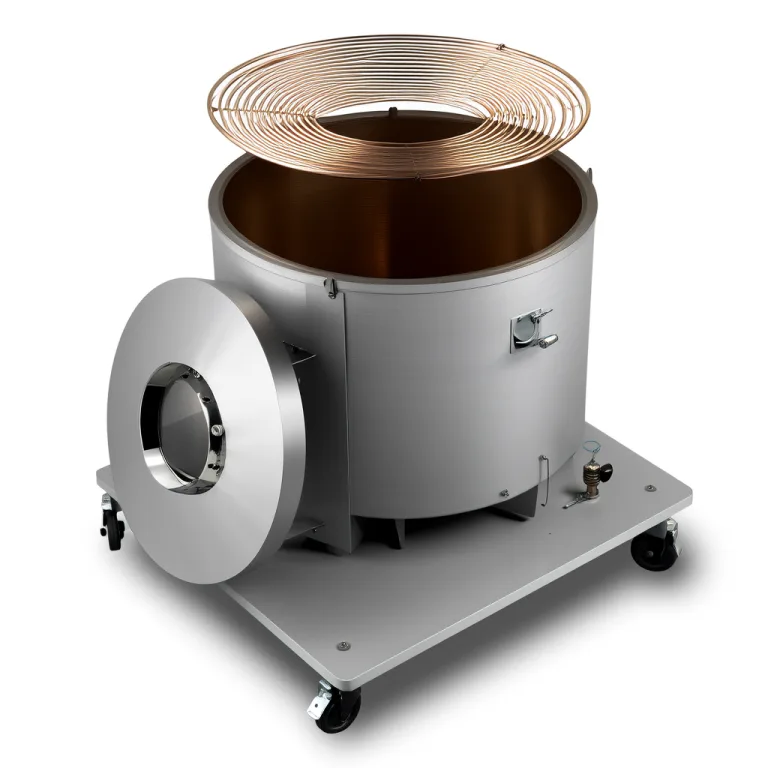
Vacuum Induction Melting Furnace
Vacuum Induction Melting Furnace for industrial applications.
About Vacuum Induction Melting Furnace
Vacuum Induction Melting Furnace for industrial applications.
| Domain | chemical |
|---|
Who Works With Vacuum Induction Melting Furnace?
4 engineering roles are connected to Vacuum Induction Melting Furnace based on verified research evidence.
Materials Engineer
Materials Engineer is a widely recognized professional engineering role. In the context of a Ceramic Ball Mill — a product whose performance critically depends on ceramic material properties (e.g., wear resistance, thermal stability, fracture toughness) — a Materials Engineer contributes to material selection, formulation optimization (evidenced by 'knowledge of ceramic formulations'), design validation, and testing of ceramic components (e.g., liners, grinding media). While specialization in ceramics is implied, 'Materials Engineer' remains the canonical, discipline-level role; 'Ceramic Materials Engineer' would be a specialization but is not the input text.
Metallurgist
Metallurgist is a well-established, globally recognized engineering profession (e.g., licensed in many jurisdictions, ABET-accredited programs, SME/ASM professional societies). In the context of Vacuum Induction Melting (VIM) furnaces — used for producing high-purity superalloys, titanium, and specialty steels — metallurgists play core technical roles: specifying furnace parameters (vacuum level, induction frequency, crucible materials), designing melting cycles, interpreting microstructure/chemistry outcomes, troubleshooting defects (e.g., gas pickup, segregation), validating melt quality via testing, and advising on maintenance of refractory linings or induction coils based on metallurgical degradation mechanisms.
Metallurgical Engineer
Metallurgical Engineer is a well-established, globally recognized engineering discipline focused on extraction, processing, and properties of metals — directly relevant to vacuum induction melting (VIM) furnace applications in chemical and advanced materials manufacturing. The evidence confirms active involvement in VIM furnace operations, including process optimization, alloy development, failure analysis, and thermal/chemical performance validation — spanning design input, operational support, troubleshooting, and testing.
Process Engineer
Beverage Process Engineer is a recognized engineering role specializing in process design, validation, and compliance for beverage manufacturing systems. While 'Beverage' denotes industry context (not product-specific specialization), the role directly engages with ribbon blenders — particularly in specification, commissioning (including IQ/OQ), CIP/SIP integration, and 3-A sanitary validation — all cited in job listings. 'Process Engineer' is the canonical, general professional title; 'Beverage' reflects domain application, not an inseparable part of the core role definition.