
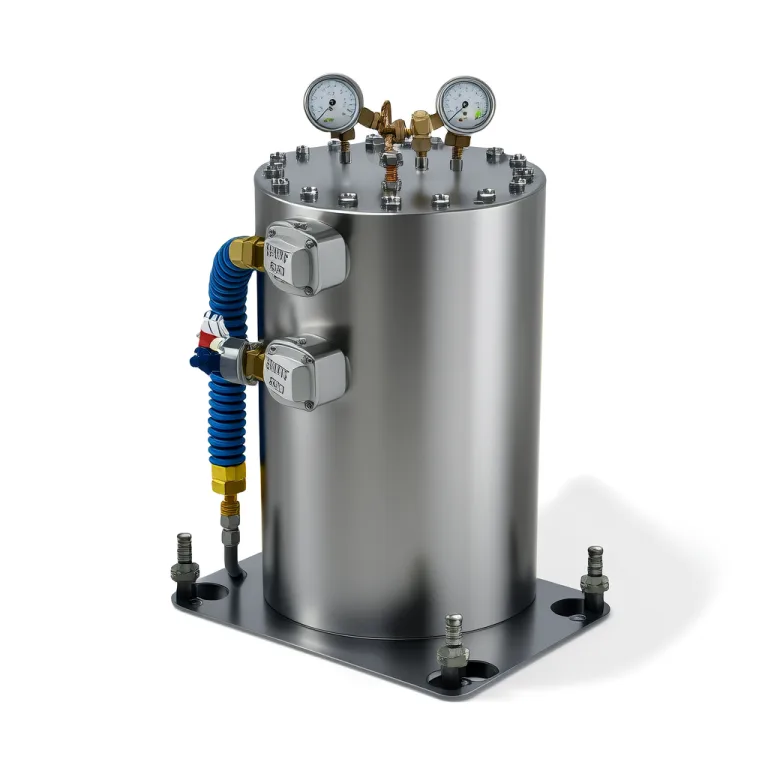
Subsea Hydraulic Power Unit
Subsea Hydraulic Power Unit for industrial applications.
About Subsea Hydraulic Power Unit
Subsea Hydraulic Power Unit for industrial applications.
| Domain | chemical |
|---|
Who Works With Subsea Hydraulic Power Unit?
6 engineering roles are connected to Subsea Hydraulic Power Unit based on verified research evidence.
ROV Pilot
ROV Pilot is a well-established, internationally recognized professional role in subsea engineering and offshore operations, especially critical for deployment, inspection, intervention, and maintenance of subsea equipment like Hydraulic Power Units. The evidence explicitly links ROV Pilots to coordination with subsea engineers in the context of subsea systems, confirming operational relevance to the product.
Subsea Engineer
Subsea Engineer is a well-established, domain-specific engineering role in offshore and subsea industrial sectors (including chemical, oil & gas, and marine engineering). It denotes a professional with expertise in designing, specifying, commissioning, and troubleshooting subsea equipment — directly applicable to the Subsea Hydraulic Power Unit. The evidence explicitly references coordination with 'subsea engineers', confirming its use as a recognized role in this context. While 'subsea' is domain-specific, it is not product-specific (i.e., not tied to one product like 'Hydraulic Power Unit Engineer'); rather, it's a standard specialization within marine/subsea engineering.
Maintenance Technician
Technician
Technician is a widely recognized professional role in HVAC engineering, explicitly referenced in ASHRAE guidance for cooling tower systems. While generic, it denotes a credentialed, hands-on technical role responsible for installation, commissioning, operation, inspection, maintenance, troubleshooting, and testing of HVAC equipment including cooling towers. It is not product-specific (e.g., no 'Cooling Tower Technician' prefix), so product_specific_title = false. The role is distinct from engineers or operators and falls under the Maintenance family with broad technical execution responsibilities.
Hydraulic Systems Engineer
The title describes a specialized engineering role focused on Subsea Hydraulic Power Units (SHPU), but 'Subsea Hydraulic Power Unit Engineer' is not a standardized, widely recognized professional title in engineering classifications (e.g., IEEE, NCEES, or ISO job taxonomies). It is a context-specific variant of Hydraulic Systems Engineer or Subsea Systems Engineer — both of which are established roles. The evidence confirms responsibilities in designing, specifying, and supporting SHPU systems, with domain-specific standards (API 17D/ISO 13628) and interfaces (ROVs, control pods, umbilicals), confirming its engineering nature and subsea specialization. However, the canonical form must generalize away from the product name per rules.
Subsea Operations Technician
Subsea HPU Operator is a domain-specific title for a recognized operational role in subsea engineering, focused on real-time operation, diagnostics, and coordination during subsea interventions. While 'HPU' refers to the product (Hydraulic Power Unit), the core function aligns with broader industry-recognized roles such as Subsea Operations Technician or Subsea Control Technician. The role is distinct from generic 'Operator' due to required subsea environment expertise, ROV integration, and hydraulic system diagnostics — consistent with standards in offshore/chemical subsea operations (e.g., OGP Report No. 415, IMCA guidelines). It is not merely a task or company title, but a defined occupational function.