
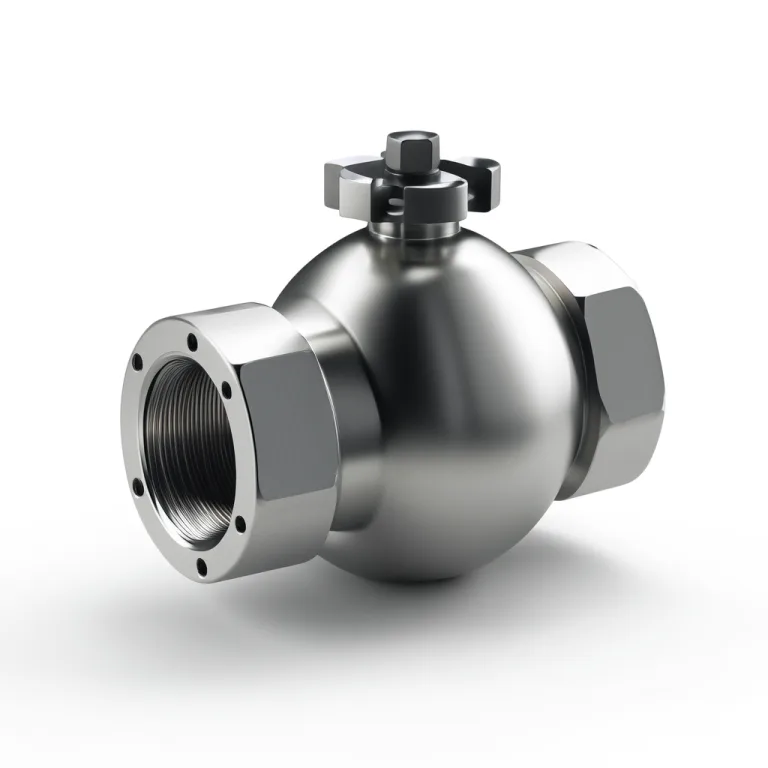
Subsea Ball Valve
Subsea Ball Valve for industrial applications.
About Subsea Ball Valve
Subsea Ball Valve for industrial applications.
| Domain | chemical |
|---|---|
| Product Family | Valves |
Who Works With Subsea Ball Valve?
13 engineering roles are connected to Subsea Ball Valve based on verified research evidence.
Process Engineer
Beverage Process Engineer is a recognized engineering role specializing in process design, validation, and compliance for beverage manufacturing systems. While 'Beverage' denotes industry context (not product-specific specialization), the role directly engages with ribbon blenders — particularly in specification, commissioning (including IQ/OQ), CIP/SIP integration, and 3-A sanitary validation — all cited in job listings. 'Process Engineer' is the canonical, general professional title; 'Beverage' reflects domain application, not an inseparable part of the core role definition.
Materials Engineer
Materials Engineer is a widely recognized professional engineering role. In the context of a Ceramic Ball Mill — a product whose performance critically depends on ceramic material properties (e.g., wear resistance, thermal stability, fracture toughness) — a Materials Engineer contributes to material selection, formulation optimization (evidenced by 'knowledge of ceramic formulations'), design validation, and testing of ceramic components (e.g., liners, grinding media). While specialization in ceramics is implied, 'Materials Engineer' remains the canonical, discipline-level role; 'Ceramic Materials Engineer' would be a specialization but is not the input text.
Integrity Engineer
Integrity Engineer is a well-established professional role in the chemical and process industries, focused on ensuring mechanical integrity of static equipment (e.g., piping, pressure vessels) — directly relevant to pipe cold cutting machines used in maintenance, repair, and integrity-related modifications. The evidence explicitly states they perform work alongside mechanical technicians in chemical plant settings, confirming their involvement in inspection, maintenance, and troubleshooting of piping systems where cold cutting is applied.
Corrosion Engineer
Corrosion Engineer is a well-established, internationally recognized engineering discipline (e.g., NACE/AMPP certified professionals) specializing in degradation mechanisms, material selection, and mitigation strategies—especially critical for agitated reactors in chemical applications where aggressive media, temperature, pressure, and agitation accelerate corrosion. Their involvement spans design-phase material specification, inspection planning, maintenance strategy development, and troubleshooting of corrosion-related failures.
Vendor Manager
Vendor Manager is a widely recognized professional role in engineering procurement, especially critical in high-integrity subsea applications where vendor qualification, FAT/SAT oversight, and supply chain risk management directly impact product reliability and compliance. The evidence explicitly cites 'vendor management' as part of the product context alongside specification and FAT/SAT support — confirming its functional relevance to the Subsea Ball Valve lifecycle.
Maintenance Technician
Commissioning Engineer
Design Engineer
Systems Engineer
‘Senior Mixing Systems Engineer’ is a real, documented job title in beverage and process industries, reflecting a senior-level systems engineering role focused on mixing equipment integration, specification, and lifecycle support. While ‘Mixing Systems’ denotes domain specialization (not vendor- or product-specific like ‘Ribbon Blender Engineer’), it aligns with recognized subdomains of process systems engineering. The canonical role is generalized to ‘Systems Engineer’ per industry standards (INCOSE, IEEE), as ‘Mixing Systems’ is a functional specialization—not a standalone profession. Evidence from active job postings confirms responsibilities directly tied to ribbon blenders: troubleshooting, PM scheduling, GMP documentation, and commissioning—supporting DESIGN, SPECIFY, TROUBLESHOOT, MAINTAIN, and COMMISSION relationships.
Test Technician
Dew point verification is a specialized test activity critical for validating dryer performance in compressed air systems; while 'dew point verification specialist' is not a widely standardized job title, it describes a practitioner performing calibrated moisture measurement and compliance verification — functionally aligned with Test Technician (especially HVAC/industrial gas systems), with specialization in dew point metrology. The role directly relates to commissioning, inspection, and performance testing of compressed air dryers.
Valve Engineer
While 'Plug Valve Engineer' is a product-specific title, it reflects a recognized sub-role within mechanical/process engineering focused on valve selection, specification, compliance (e.g., API 599/6D), and safety-critical application in chemical plants. Industry evidence (Glassdoor job postings) confirms its usage as a functional title; however, the canonical, widely recognized professional role is 'Valve Engineer', which encompasses plug, ball, gate, and other industrial valve types. The specialization in plug valves is contextual, not defining of a distinct profession.
Subsea Technician
Subsea Technician is a widely recognized professional role in offshore and subsea engineering, especially within oil & gas and industrial subsea applications. Evidence confirms direct involvement with subsea valves (including intervention, ROV-assisted maintenance, and chemical injection system support), which aligns with inspection, maintenance, troubleshooting, and commissioning of subsea ball valves. While 'subsea' denotes an environment, it constitutes a well-established domain-specific specialization—not merely product-specific—akin to 'HV Technician' or 'Marine Technician'. The role is not tied exclusively to one product (e.g., 'Ball Valve Technician') but operates across subsea hardware including valves, actuators, and chemical injection systems.
Remote Operated Vehicle Technician
ROV Technician is a widely recognized professional role in subsea oil & gas and offshore chemical industries, specifically trained to operate, maintain, and deploy ROVs for inspection, intervention, and maintenance of subsea infrastructure—including subsea ball valves. The evidence 'ROV-assisted maintenance' directly links this role to maintaining the Subsea Ball Valve product.