
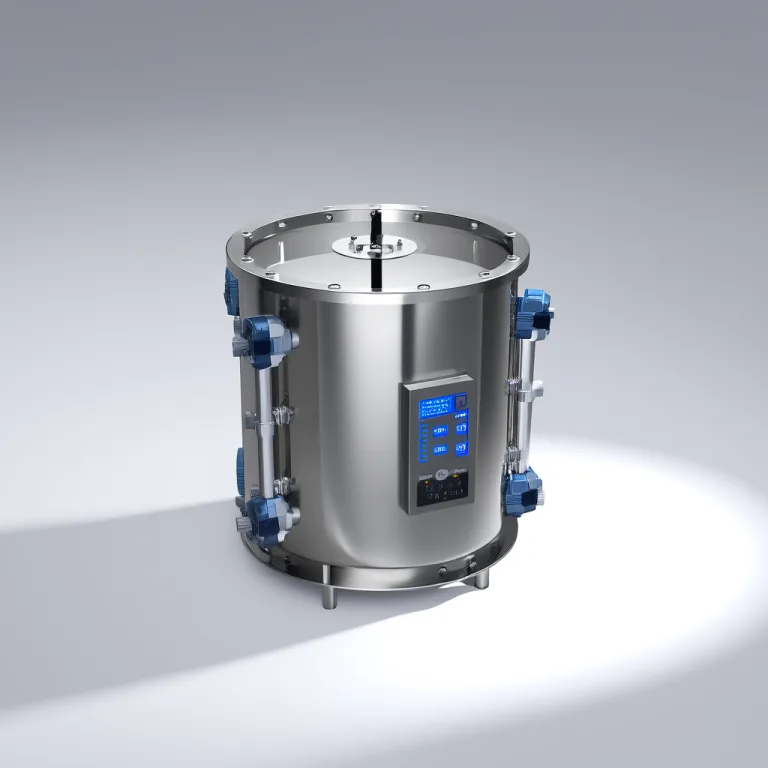
Membrane Bioreactor
Membrane Bioreactor for industrial applications.
About Membrane Bioreactor
Membrane Bioreactor for industrial applications.
| Domain | chemical |
|---|
Who Works With Membrane Bioreactor?
4 engineering roles are connected to Membrane Bioreactor based on verified research evidence.
Process Engineer
Beverage Process Engineer is a recognized engineering role specializing in process design, validation, and compliance for beverage manufacturing systems. While 'Beverage' denotes industry context (not product-specific specialization), the role directly engages with ribbon blenders — particularly in specification, commissioning (including IQ/OQ), CIP/SIP integration, and 3-A sanitary validation — all cited in job listings. 'Process Engineer' is the canonical, general professional title; 'Beverage' reflects domain application, not an inseparable part of the core role definition.
Chemical Engineer
Chemical Engineer is a globally recognized, accredited engineering profession. In the context of industrial reverse osmosis systems, Chemical Engineers are routinely involved in system design (e.g., membrane selection, pretreatment chemistry, scaling/fouling analysis), process specification, operational optimization, troubleshooting (e.g., flux decline, chemical cleaning protocols), and overall plant/system management. The role is not product-specific — 'Chemical Engineer' does not embed 'Reverse Osmosis' or other product terms — so it remains canonical without generalization.
Professional Engineer
Professional Engineer is a legally defined, licensed engineering role in the US and many jurisdictions; it is a widely recognized professional title across all engineering disciplines, including chemical and environmental engineering relevant to membrane bioreactors. The ASCE job posting confirms its application in MBR feasibility, technology selection, and system integration — directly linking it to design, specification, selection, and integration of the product.
Environmental Engineer
Environmental Engineer is a widely recognized professional engineering role. In the acoustics domain—particularly for sound level meters—the role conducts noise surveys using such instruments, evaluates noise exposure, specifies appropriate measurement equipment (e.g., Class 1 vs. Class 2 SLMs), interprets acoustic data for compliance, and may specify or validate test protocols. The evidence explicitly links this role to conducting noise surveys with calibrated sound level meters and ensuring regulatory compliance (NIOSH/OSHA), confirming direct functional relationships to selection, specification, testing, and inspection of the product.