
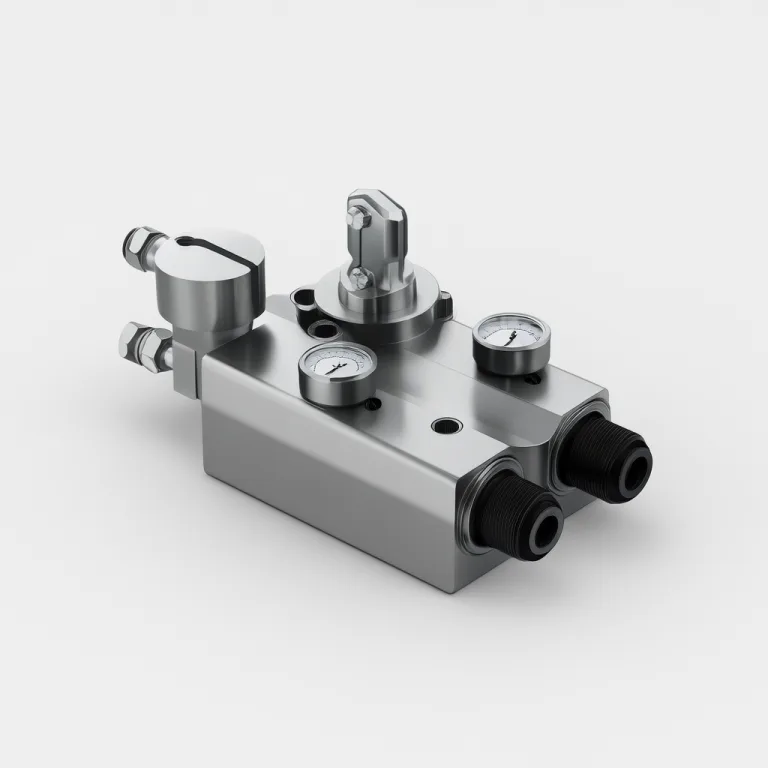
Mechanical Seal Support System
Mechanical Seal Support System for industrial applications.
About Mechanical Seal Support System
Mechanical Seal Support System for industrial applications.
| Domain | chemical |
|---|
Who Works With Mechanical Seal Support System?
14 engineering roles are connected to Mechanical Seal Support System based on verified research evidence.
Maintenance Technician
Commissioning Technician
Commissioning Technician is a widely recognized, distinct technical role in industrial automation and power electronics domains. It denotes a specialized technician responsible for functional verification, system integration, safety checks, diagnostics, firmware updates, and documentation of control equipment — directly applicable to VFDs/motor drives. The cited responsibilities (diagnostics, firmware updates, thermal imaging, ISO 55000-aligned documentation) align precisely with standard commissioning practice for motor drive systems. While 'Technician' is generic, 'Commissioning Technician' is an established occupational title in IEC/ISA standards and engineering contracting workflows.
Instrumentation Technician
Sensor Technician is a widely recognized occupational title in industrial automation, particularly within instrumentation and control systems. While 'Sensor Technician' explicitly references the product (sensors), it maps directly to the standardized role 'Instrumentation Technician'—a core profession in process and automation engineering that specializes in calibration, maintenance, diagnostics, and integration of field devices including proximity, temperature, and pressure sensors. Evidence from Glassdoor job postings confirms responsibilities aligned with sensor lifecycle support in automation contexts.
Calibration Technician
Calibration Technician is a widely recognized, standardized industrial role—especially in instrumentation and control domains. In the context of pressure transmitters (electrical/industrial instrumentation), this role directly performs calibration, functional verification, troubleshooting, and preventive maintenance per industry practice (e.g., ISA-84, IEC 61511, and manufacturer maintenance guidelines). The role is not product-specific (i.e., not 'Pressure Transmitter Calibration Technician'), so canonical form remains general. Evidence confirms emphasis on calibration and troubleshooting of pressure instrumentation.
Plant Operator
Plant Operator is a widely recognized, standardized industrial operations role responsible for day-to-day monitoring, control, and basic intervention in process systems—including membrane-based water treatment systems like reverse osmosis. In chemical plant contexts, Plant Operators routinely operate RO systems, respond to alarms, log performance data, perform routine checks, and initiate corrective actions—directly aligning with OPERATE, INSPECT, and TROUBLESHOOT relationships. The title contains no product-specific modifier (e.g., 'RO Plant Operator'), so it is not over-specialized.
Procurement Coordinator
Procurement Coordinator is a widely recognized professional role in industrial and chemical engineering contexts. In the context of Filter Press Cloth, this role directly handles sourcing, vendor coordination, specification alignment (e.g., material compatibility, micron rating, chemical resistance), and timely replacement—evidenced by CareerBuilder data linking them to cloth inspection outcomes and CMMS-driven procurement workflows in chemical/pharma settings.
Failure Analyst
Field Failure Analyst is a recognized engineering role focused on root cause analysis of equipment failures in operational (field) environments. In the context of Mechanical Seal Support Systems (MSSS), this role investigates seal system failures—e.g., leaks, pressure loss, or contamination—to inform design improvements, maintenance protocols, and vendor corrective actions. Evidence from Baker Hughes job posting confirms its use as a distinct, domain-relevant function supporting chemical/process industries and API 682-compliant MSSS applications.
Fluid Analyst
Fluid Analyst is a recognized technical role in chemical, petrochemical, and rotating equipment industries—specifically tasked with analyzing barrier fluids, flush fluids, and buffer gases in Mechanical Seal Support Systems (MSSS) to detect degradation, contamination, or deviations from API 682 requirements. Evidence confirms ETS Ltd. includes 'fluid analysis' as part of MSSS maintenance and troubleshooting responsibilities, aligning directly with this role’s scope.
Design Review Engineer
Design Review Engineer is a widely recognized engineering role in mechanical, process, and rotating equipment domains—especially in regulated industries like chemical processing. Evidence from Baker Hughes confirms its use for reviewing Mechanical Seal Support System (MSSS) designs, ensuring compliance with API 682 and performing failure analysis. While 'Design Review' describes an activity, 'Design Review Engineer' denotes a formal job title with defined responsibilities, distinct from generic 'Engineer' or task labels like 'Review Design'. It falls under engineering validation and verification functions—not merely a task.
Mechanical Engineer
Facilities Mechanical Engineer is a widely recognized professional role in building services and HVAC engineering, focused on the design, operation, maintenance, and optimization of mechanical systems—including chillers—in commercial and industrial facilities. While 'Facilities' denotes a domain specialization (not product-specific), it does not make the title product-specific (e.g., not 'Chiller Mechanical Engineer'). The role is distinct from generic Mechanical Engineer due to its consistent association with facility infrastructure, lifecycle management, and integrated HVAC system oversight. Evidence from job boards (Indeed) confirms real-world usage with explicit chiller-related responsibilities.
Environmental Engineer
Environmental Engineer is a widely recognized professional engineering role. In the acoustics domain—particularly for sound level meters—the role conducts noise surveys using such instruments, evaluates noise exposure, specifies appropriate measurement equipment (e.g., Class 1 vs. Class 2 SLMs), interprets acoustic data for compliance, and may specify or validate test protocols. The evidence explicitly links this role to conducting noise surveys with calibrated sound level meters and ensuring regulatory compliance (NIOSH/OSHA), confirming direct functional relationships to selection, specification, testing, and inspection of the product.
Process Safety Engineer
HAZOP (Hazard and Operability Study) is a formal, structured, multidisciplinary safety review process widely used in chemical process industries. While 'HAZOP participant' is a functional descriptor rather than a formal job title, it consistently refers to qualified professionals—most commonly Process Safety Engineers, Chemical Engineers, Instrumentation & Control Engineers, or Operations Specialists—who are trained and authorized to contribute to HAZOP studies. In the context of a Filter Press (a pressure-driven solid-liquid separation unit with potential hazards including overpressure, slurry leakage, mechanical failure, and chemical exposure), HAZOP participants assess deviations (e.g., 'no flow', 'high pressure') and recommend safeguards. The canonical role is generalized to 'Process Safety Engineer' as the most representative, discipline-agnostic professional role with primary ownership of HAZOP leadership and technical rigor; other contributors (e.g., Operations Lead, Maintenance Engineer) are secondary participants. This role directly relates to inspecting design safety, testing operational assumptions, and managing risk for the product.
Compliance Engineer
API 682 Compliance Verifier is not a standalone, widely recognized job title in standard occupational taxonomies, but reflects a real and functionally distinct role performed by engineers (typically Mechanical or Reliability Engineers) specializing in seal system standards compliance. In chemical plant contexts involving Mechanical Seal Support Systems (MSSS), verifying conformance to API RP 682 is a defined responsibility—often embedded within commissioning, inspection, and maintenance workflows. The canonical role 'Compliance Engineer' captures the core profession and function; 'Standards Compliance' is a valid specialization in process industries. The title is product- and standard-specific (hence product_specific_title=true), but the underlying role is recognized and recurrent in API-regulated domains.
Mechanical Seal Engineer
While 'Dual Pressurized Seal Specialist' is a product- and application-specific title (referencing API 682-compliant dual pressurized seal configurations used in mechanical seal support systems), it denotes a recognized engineering specialization within rotating equipment reliability and sealing technology. The canonical role is 'Mechanical Seal Engineer', a well-established professional role in the chemical and process industries, particularly for engineers who design, specify, commission, and troubleshoot seal support systems—including dual pressurized arrangements for hazardous service. Sulzer’s documentation and API 682 standards confirm this as a domain-specific engineering function, not merely a task or marketing label.