
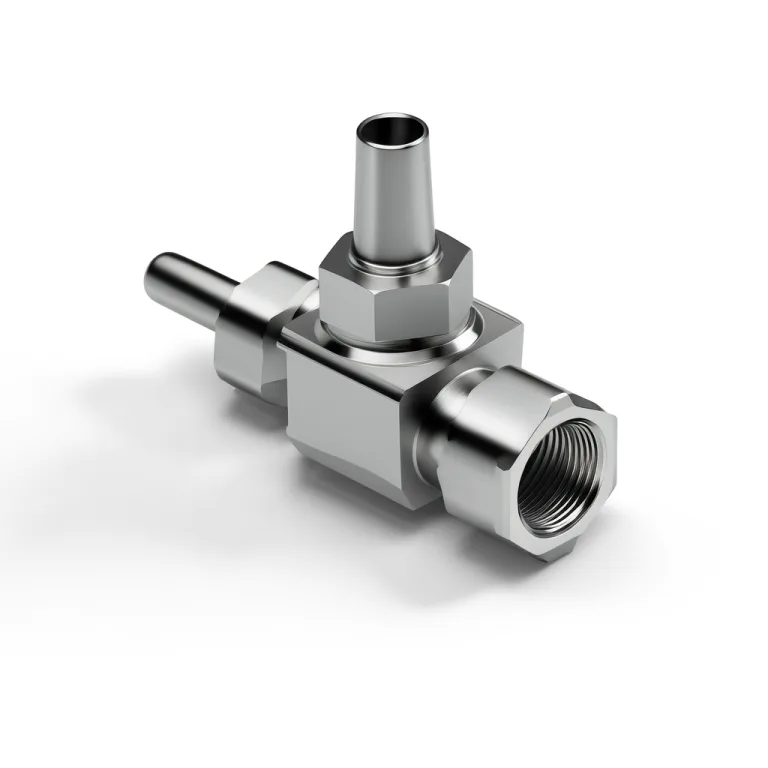
High Pressure Needle Valve
High Pressure Needle Valve for industrial applications.
About High Pressure Needle Valve
High Pressure Needle Valve for industrial applications.
| Domain | chemical |
|---|---|
| Product Family | Valves |
Who Works With High Pressure Needle Valve?
10 engineering roles are connected to High Pressure Needle Valve based on verified research evidence.
Instrumentation Technician
Sensor Technician is a widely recognized occupational title in industrial automation, particularly within instrumentation and control systems. While 'Sensor Technician' explicitly references the product (sensors), it maps directly to the standardized role 'Instrumentation Technician'—a core profession in process and automation engineering that specializes in calibration, maintenance, diagnostics, and integration of field devices including proximity, temperature, and pressure sensors. Evidence from Glassdoor job postings confirms responsibilities aligned with sensor lifecycle support in automation contexts.
Maintenance Engineer
The title denotes a recognized engineering role focused on maintenance of servo drives; 'Servo Drive' is a product-specific modifier, but the core professional role is 'Maintenance Engineer', a widely accepted title in industrial electrical engineering. Evidence from LinkedIn job postings confirms its usage for professionals performing fault diagnosis, root cause analysis, and corrective maintenance on servo drive systems.
Process Safety Engineer
HAZOP (Hazard and Operability Study) is a formal, structured, multidisciplinary safety review process widely used in chemical process industries. While 'HAZOP participant' is a functional descriptor rather than a formal job title, it consistently refers to qualified professionals—most commonly Process Safety Engineers, Chemical Engineers, Instrumentation & Control Engineers, or Operations Specialists—who are trained and authorized to contribute to HAZOP studies. In the context of a Filter Press (a pressure-driven solid-liquid separation unit with potential hazards including overpressure, slurry leakage, mechanical failure, and chemical exposure), HAZOP participants assess deviations (e.g., 'no flow', 'high pressure') and recommend safeguards. The canonical role is generalized to 'Process Safety Engineer' as the most representative, discipline-agnostic professional role with primary ownership of HAZOP leadership and technical rigor; other contributors (e.g., Operations Lead, Maintenance Engineer) are secondary participants. This role directly relates to inspecting design safety, testing operational assumptions, and managing risk for the product.
Process Technician
Plastics Technicians are recognized industrial technicians specializing in plastics processing equipment, including extrusion machines. While 'Plastics Technicians' is product-contextualized (tied to plastic materials and extrusion), the canonical professional role is 'Process Technician' — a widely accepted title in chemical/manufacturing engineering for frontline operators of continuous process equipment. Evidence confirms their learning outcomes explicitly cover extrusion machine operation, troubleshooting, and maintenance — directly linking them to the Plastic Extrusion Machine.
Process Safety Management Coordinator
PSM (Process Safety Management) Coordinators are recognized roles in chemical process industries responsible for ensuring compliance with OSHA 1910.119 and related standards. They oversee safety-critical procedures, documentation, mechanical integrity programs, and management of change — all directly applicable to high-integrity isolation devices like Double Block and Bleed Valves. Their involvement includes specifying PSM-aligned valve requirements, inspecting maintenance records, verifying testing protocols, and managing valve-related process safety information.
Technician
Technician is a widely recognized professional role in HVAC engineering, explicitly referenced in ASHRAE guidance for cooling tower systems. While generic, it denotes a credentialed, hands-on technical role responsible for installation, commissioning, operation, inspection, maintenance, troubleshooting, and testing of HVAC equipment including cooling towers. It is not product-specific (e.g., no 'Cooling Tower Technician' prefix), so product_specific_title = false. The role is distinct from engineers or operators and falls under the Maintenance family with broad technical execution responsibilities.
Plant Technician
Chemical plant technician is a widely recognized operational role in process industries; while 'chemical plant' denotes industry context, the core role is Plant Technician — a standard occupational title. Evidence confirms technicians perform valve maintenance (including gate valves), fluid system troubleshooting, and preventive maintenance, directly relating to inspection, maintenance, troubleshooting, and operation of industrial valves.
Inspection Technician
Inspection Technician is a widely recognized professional role in industrial engineering, especially in regulated sectors like chemical processing. In the context of Bag Filter Housing — which must comply with material compatibility (e.g., PTFE lining), pressure integrity, explosion venting, and inspection protocols — this role performs critical pre-commissioning, in-service, and post-maintenance inspections. The title is generic (not product-specific), aligning with standard occupational classifications (e.g., O*NET 45-4022.00, ISO/IEC 17020).
Support Engineer
Support Engineer is a widely recognized professional role in industrial engineering contexts, especially in chemical and process industries where technical support for critical components (e.g., High Pressure Needle Valves) is essential. The term 'supporting engineers' is a plural, descriptive variant of the standard title 'Support Engineer'. It implies cross-functional engineering assistance — including application guidance, integration support, failure analysis, and field troubleshooting — directly tied to valve selection, installation, commissioning, and reliability. While not product-specific (no embedded reference to 'valve' or 'needle'), it is domain-applicable and functionally distinct from generic 'engineers'. Evidence references 'typical duties for supporting engineers and technicians' confirms operational relevance to the product context.
Mechanical Engineer
Facilities Mechanical Engineer is a widely recognized professional role in building services and HVAC engineering, focused on the design, operation, maintenance, and optimization of mechanical systems—including chillers—in commercial and industrial facilities. While 'Facilities' denotes a domain specialization (not product-specific), it does not make the title product-specific (e.g., not 'Chiller Mechanical Engineer'). The role is distinct from generic Mechanical Engineer due to its consistent association with facility infrastructure, lifecycle management, and integrated HVAC system oversight. Evidence from job boards (Indeed) confirms real-world usage with explicit chiller-related responsibilities.