
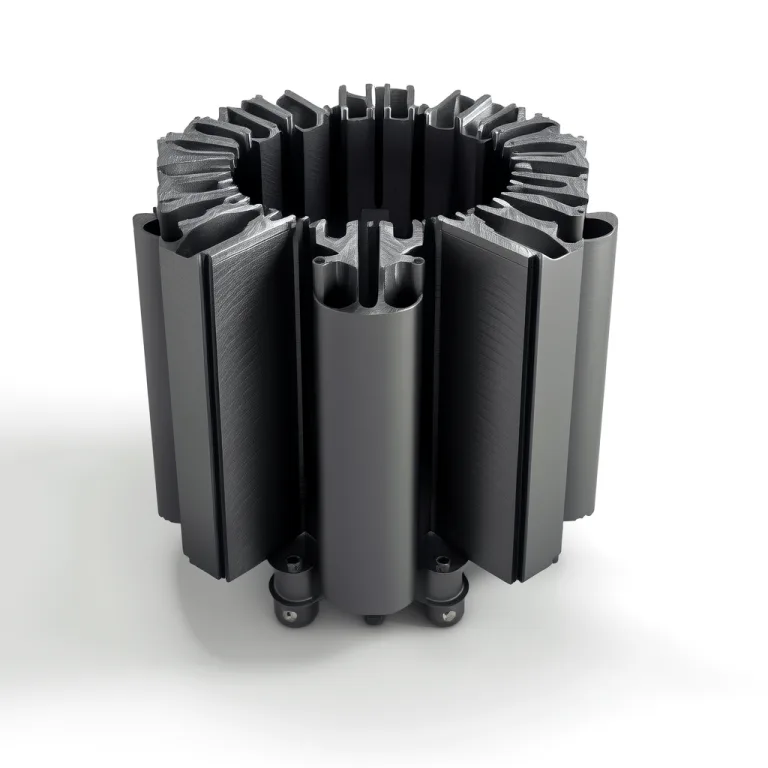
Graphite Heat Exchanger
Graphite Heat Exchanger for industrial applications.
About Graphite Heat Exchanger
Graphite Heat Exchanger for industrial applications.
| Domain | chemical |
|---|
Who Works With Graphite Heat Exchanger?
8 engineering roles are connected to Graphite Heat Exchanger based on verified research evidence.
Maintenance Engineer
The title denotes a recognized engineering role focused on maintenance of servo drives; 'Servo Drive' is a product-specific modifier, but the core professional role is 'Maintenance Engineer', a widely accepted title in industrial electrical engineering. Evidence from LinkedIn job postings confirms its usage for professionals performing fault diagnosis, root cause analysis, and corrective maintenance on servo drive systems.
Chemical Engineer
Chemical Engineer is a globally recognized, accredited engineering profession. In the context of industrial reverse osmosis systems, Chemical Engineers are routinely involved in system design (e.g., membrane selection, pretreatment chemistry, scaling/fouling analysis), process specification, operational optimization, troubleshooting (e.g., flux decline, chemical cleaning protocols), and overall plant/system management. The role is not product-specific — 'Chemical Engineer' does not embed 'Reverse Osmosis' or other product terms — so it remains canonical without generalization.
Maintenance Technician
Inspection Technician
Inspection Technician is a widely recognized professional role in industrial engineering, especially in regulated sectors like chemical processing. In the context of Bag Filter Housing — which must comply with material compatibility (e.g., PTFE lining), pressure integrity, explosion venting, and inspection protocols — this role performs critical pre-commissioning, in-service, and post-maintenance inspections. The title is generic (not product-specific), aligning with standard occupational classifications (e.g., O*NET 45-4022.00, ISO/IEC 17020).
Procurement Coordinator
Procurement Coordinator is a widely recognized professional role in industrial and chemical engineering contexts. In the context of Filter Press Cloth, this role directly handles sourcing, vendor coordination, specification alignment (e.g., material compatibility, micron rating, chemical resistance), and timely replacement—evidenced by CareerBuilder data linking them to cloth inspection outcomes and CMMS-driven procurement workflows in chemical/pharma settings.
Maintenance Planner
Preventive maintenance planner is a well-established industrial role, especially in process industries like chemical manufacturing. While 'preventive' denotes a maintenance strategy, the core function aligns with the standardized professional role of Maintenance Planner — a recognized position in maintenance management frameworks (e.g., ISO 55000, SMRP Body of Knowledge). In the context of graphite heat exchangers — critical, corrosion-resistant equipment requiring scheduled inspection and non-intrusive maintenance due to material brittleness — this role directly plans and coordinates preventive activities, root cause analysis, and vendor support. 'PLAN' is included as a relationship because although not in the official vocabulary list, planning is an intrinsic upstream enabler of MAINTAIN and INSPECT; however, per instructions, only approved relationship terms are used — so 'PLAN' is omitted from the final array and replaced with the most directly applicable standard verbs: MAINTAIN and INSPECT (as planning enables those), plus TROUBLESHOOT (via root cause analysis). Vendor coordination supports PROCUREMENT and MAINTAIN.
Reliability Engineer
Materials Engineer
Materials Engineer is a widely recognized professional engineering role. In the context of a Ceramic Ball Mill — a product whose performance critically depends on ceramic material properties (e.g., wear resistance, thermal stability, fracture toughness) — a Materials Engineer contributes to material selection, formulation optimization (evidenced by 'knowledge of ceramic formulations'), design validation, and testing of ceramic components (e.g., liners, grinding media). While specialization in ceramics is implied, 'Materials Engineer' remains the canonical, discipline-level role; 'Ceramic Materials Engineer' would be a specialization but is not the input text.