
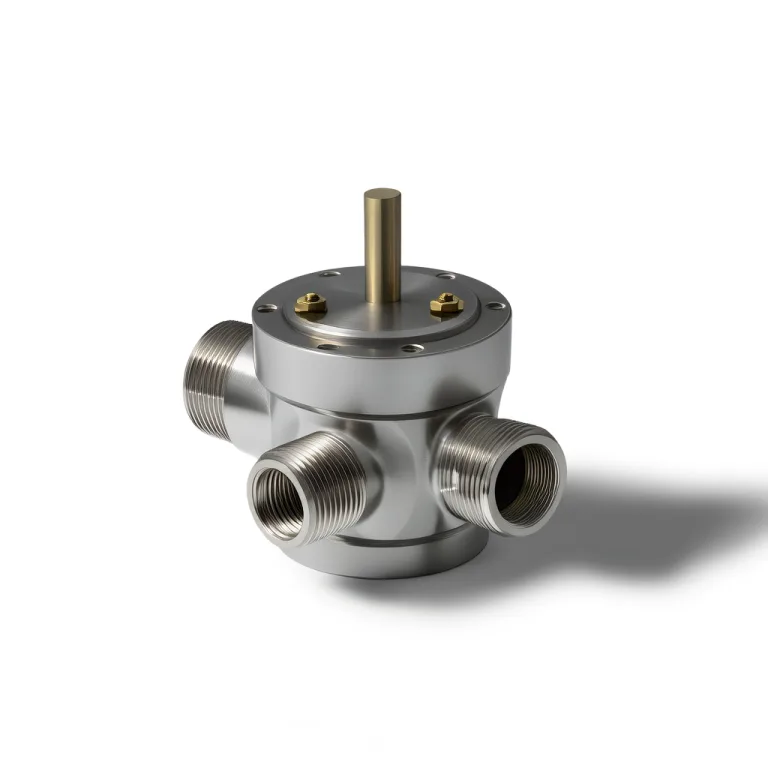
Excess Flow Valve
Excess Flow Valve for industrial applications.
About Excess Flow Valve
Excess Flow Valve for industrial applications.
| Domain | chemical |
|---|---|
| Product Family | Valves |
Who Works With Excess Flow Valve?
8 engineering roles are connected to Excess Flow Valve based on verified research evidence.
Maintenance Technician
Reliability Engineer
Technician
Technician is a widely recognized professional role in HVAC engineering, explicitly referenced in ASHRAE guidance for cooling tower systems. While generic, it denotes a credentialed, hands-on technical role responsible for installation, commissioning, operation, inspection, maintenance, troubleshooting, and testing of HVAC equipment including cooling towers. It is not product-specific (e.g., no 'Cooling Tower Technician' prefix), so product_specific_title = false. The role is distinct from engineers or operators and falls under the Maintenance family with broad technical execution responsibilities.
Instrumentation and Control Technician
Technician is a widely recognized professional role in industrial automation; within DCS contexts, it specifically refers to Instrumentation and Control Technicians (also called DCS Technicians or I&C Technicians), who perform hands-on installation, calibration, commissioning, maintenance, and troubleshooting of distributed control systems. The evidence from Indeed job listings confirms active demand for 'Distributed Control System Technicians' across critical infrastructure sectors.
Process Safety Engineer
HAZOP (Hazard and Operability Study) is a formal, structured, multidisciplinary safety review process widely used in chemical process industries. While 'HAZOP participant' is a functional descriptor rather than a formal job title, it consistently refers to qualified professionals—most commonly Process Safety Engineers, Chemical Engineers, Instrumentation & Control Engineers, or Operations Specialists—who are trained and authorized to contribute to HAZOP studies. In the context of a Filter Press (a pressure-driven solid-liquid separation unit with potential hazards including overpressure, slurry leakage, mechanical failure, and chemical exposure), HAZOP participants assess deviations (e.g., 'no flow', 'high pressure') and recommend safeguards. The canonical role is generalized to 'Process Safety Engineer' as the most representative, discipline-agnostic professional role with primary ownership of HAZOP leadership and technical rigor; other contributors (e.g., Operations Lead, Maintenance Engineer) are secondary participants. This role directly relates to inspecting design safety, testing operational assumptions, and managing risk for the product.
Plant Engineer
Plant Engineer is a widely recognized professional role in industrial engineering contexts, responsible for the overall operation, reliability, and maintenance of plant systems—including auxiliary equipment like boiler feedwater pumps. The evidence explicitly places them in collaboration with control room operators in the context of boiler system operations, confirming their operational and technical oversight role over such critical rotating equipment.
Field Technician
Field Technician is a widely recognized professional role in industrial engineering contexts, especially for commissioning, startup, maintenance, and troubleshooting of process equipment like Gas Pressure Regulating Skids. Evidence explicitly links them to installation and FAT/SAT (Factory Acceptance Test / Site Acceptance Test), confirming involvement in commissioning, inspection, and operational readiness activities.